SUBSCRIBE to our monthly NEWSLETTER
Sewage Treatment Plant in Hyderabad: Complete Buyer’s Guide (2026)
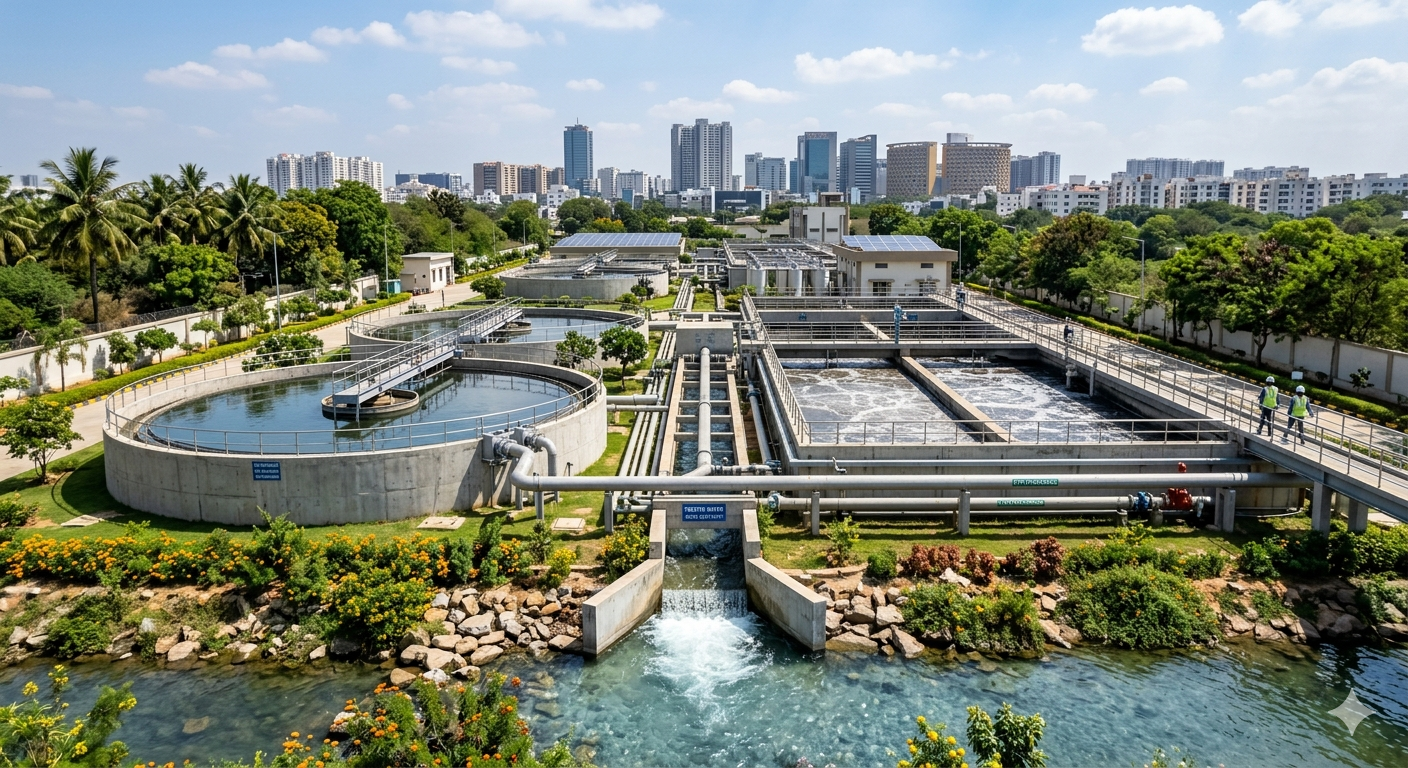
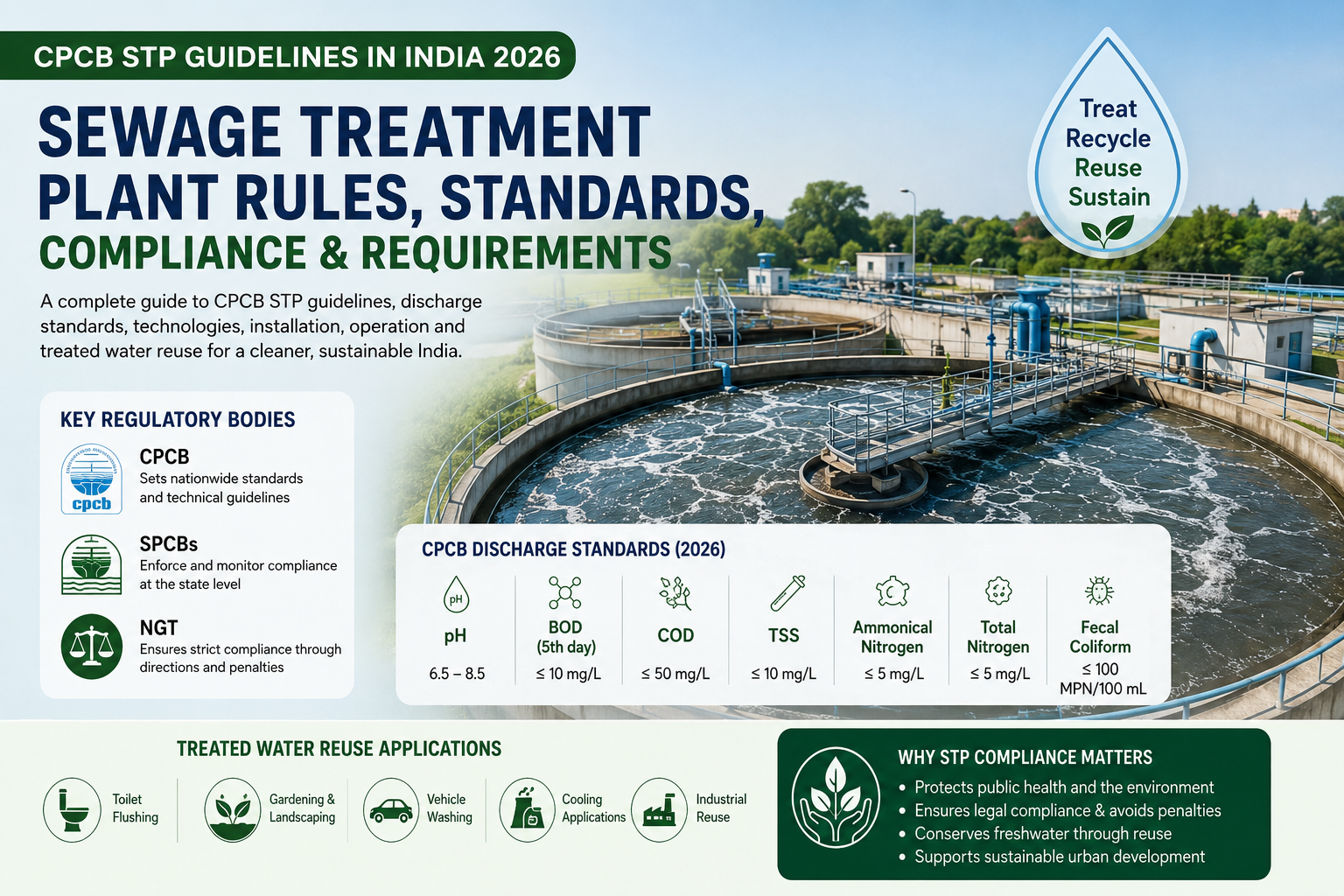
Vijayawada is one of the rapidly developing cities in Andhra Pradesh, with growing residential communities, commercial establishments, hospitals, educational institutions, industries, and infrastructure projects. As population and development increase, the amount of sewage and wastewater generated every day also increases. Proper sewage treatment has therefore become an important part of sustainable urban development.
An efficient sewage treatment plant in Vijayawada helps treat domestic wastewater before it is discharged or reused. A properly designed STP can reduce pollutants, protect water resources, support water reuse, and help organizations meet applicable environmental requirements.
Indus Ecowater provides advanced sewage treatment solutions for residential, commercial, institutional, industrial, and municipal applications. From STP capacity selection and technology consultation to plant installation and support, Indus Ecowater offers customized wastewater treatment solutions based on the requirements of each project.
Why Is a Sewage Treatment Plant Important in Vijayawada?
Rapid urbanization creates increasing demand for effective wastewater management. Apartments, gated communities, hotels, hospitals, schools, offices, industries, and other establishments generate significant quantities of sewage every day.
If untreated sewage is discharged into drains, lakes, rivers, or open areas, it can cause water pollution, unpleasant odours, soil contamination, and environmental damage. Sewage treatment helps separate and reduce organic matter, suspended solids, and other contaminants from wastewater.
A properly designed STP plant in Vijayawada can help organizations:
- Treat sewage before discharge
- Improve wastewater management
- Reduce environmental pollution
- Reuse treated wastewater for suitable non-potable applications
- Reduce dependence on freshwater for landscaping and flushing
- Improve overall sustainability
- Support compliance with applicable environmental standards
For these reasons, choosing the right sewage treatment plant supplier in Vijayawada is an important decision for any new or existing project.
What Is a Sewage Treatment Plant?
A Sewage Treatment Plant, commonly known as an STP, is a wastewater treatment system designed to treat sewage generated from residential and commercial activities.
The treatment process generally involves multiple stages. Depending on the selected technology and required treated-water quality, an STP may include screening, equalization, biological treatment, clarification, filtration, disinfection, and sludge management.
The basic objective is to convert untreated sewage into treated water that can be safely discharged or reused for appropriate applications.
The right treatment technology depends on several factors, including:
- Sewage generation
- Required STP capacity
- Available installation area
- Influent wastewater characteristics
- Required treated-water quality
- Water reuse requirements
- Automation requirements
- Operating conditions
- Project budget
Therefore, an STP solution provider in Vijayawada should evaluate the complete project rather than simply recommending a standard plant.
Indus Ecowater – Sewage Treatment Plant Supplier in Vijayawada
Indus Ecowater provides sewage treatment plant solutions in Vijayawada for projects with different capacities and wastewater treatment requirements.
The focus is on providing practical, efficient, and customized wastewater treatment solutions rather than using a one-size-fits-all approach.
Indus Ecowater can support customers through different stages of an STP project, including:
- Understanding the project requirement
- Estimating sewage generation
- Selecting the appropriate STP capacity
- Evaluating available space
- Recommending suitable treatment technology
- Designing the treatment system
- Manufacturing and supplying equipment
- Installation and commissioning
- Operation and maintenance guidance
- Technical support
Whether the requirement is for an apartment complex, commercial building, hospital, industrial facility, institution, or larger community project, the STP should be designed according to the specific wastewater characteristics and project requirements.
Sewage Treatment Solutions for Different Applications
Different buildings generate different quantities and types of wastewater. Indus Ecowater can provide customized wastewater treatment solutions in Vijayawada for a range of applications.
Residential Sewage Treatment Plants
Apartments, gated communities, residential complexes, and townships generate domestic sewage from bathrooms, kitchens, toilets, and other household activities.
A properly designed residential STP can treat this wastewater and produce treated water suitable for approved non-potable reuse applications such as landscaping and toilet flushing, subject to the required treatment quality and local requirements.
Commercial Sewage Treatment Plants
Hotels, shopping centres, office buildings, restaurants, business parks, and commercial complexes generate wastewater every day.
A commercial sewage treatment plant supplier in Vijayawada can help businesses select an STP based on daily sewage generation, occupancy, operating hours, available space, and treated-water requirements.
Hospital Sewage Treatment Plants
Hospitals and healthcare facilities require careful wastewater management because their wastewater characteristics can differ from ordinary domestic sewage.
A suitable treatment system should be designed after understanding the wastewater source, quantity, characteristics, and applicable treatment requirements.
Industrial Sewage Treatment Solutions
Industrial campuses may generate both domestic sewage and process wastewater. These streams should be evaluated separately where necessary.
For industrial projects, the selection of treatment technology depends heavily on wastewater characteristics. Indus Ecowater can help evaluate the requirement and recommend an appropriate treatment approach.
Institutional and Educational Projects
Schools, colleges, universities, hostels, and other institutions generate sewage based on student population, staff strength, kitchens, hostels, and other facilities.
A customized STP plant for residential and institutional projects in Vijayawada can provide an effective solution for treating and reusing wastewater.
Types of Sewage Treatment Plants
The most appropriate STP technology depends on the project requirement. Common technologies include:
MBBR Sewage Treatment Plant
Moving Bed Biofilm Reactor, or MBBR, is a biological wastewater treatment technology that uses specially designed media to support microbial growth.
MBBR systems can be suitable for various residential, commercial, and institutional applications when properly designed and operated.
SBR Sewage Treatment Plant
Sequencing Batch Reactor, or SBR, performs different treatment stages in a sequential batch process.
SBR technology can be useful where process control, automation, and efficient biological treatment are required.
MBR Sewage Treatment Plant
Membrane Bioreactor, or MBR, combines biological treatment with membrane filtration.
MBR systems can provide high-quality treated water and may be considered where space is limited or higher-quality water reuse is required.
Packaged Sewage Treatment Plant
Packaged STPs are factory-assembled or modular treatment systems designed to simplify installation and reduce project complexity.
They can be particularly useful for projects where compact installation and faster deployment are important.
The right packaged sewage treatment plant supplier in Vijayawada should evaluate the project before recommending the system capacity and configuration.
How to Select the Right STP Capacity?
One of the most important decisions in an STP project is determining the correct capacity.
STP capacity is commonly expressed in KLD – Kilolitres per Day.
For example, a residential development with a large population will require a higher treatment capacity than a small commercial building.
Capacity estimation may consider:
- Number of residents
- Number of employees
- Visitors
- Water consumption
- Occupancy
- Commercial activities
- Kitchen and canteen wastewater
- Future expansion
- Peak wastewater generation
Selecting an STP that is too small can result in hydraulic overloading, while an unnecessarily oversized plant can increase capital and operating costs.
Therefore, professional evaluation is recommended before selecting an STP plant manufacturer in Vijayawada.
How Does an STP Work?
Although the exact configuration differs according to technology, a typical sewage treatment process may include the following stages.
1. Screening
Large floating materials and unwanted solids are removed from incoming sewage.
2. Equalization
An equalization tank may be used to balance variations in wastewater flow and characteristics.
3. Biological Treatment
Microorganisms break down biodegradable organic matter under controlled conditions.
4. Clarification
Suspended solids and biological sludge are separated from the treated water.
5. Filtration
Additional filtration may be provided depending on the required treated-water quality.
6. Disinfection
Disinfection can be incorporated to reduce microorganisms before reuse or discharge.
7. Treated Water Reuse
Depending on quality and applicable requirements, treated water may be reused for suitable non-potable applications.
8. Sludge Management
Sludge generated during treatment needs to be properly handled, dewatered, stored, and disposed of according to applicable requirements.
Benefits of Choosing a Professional STP Solution Provider
Selecting an STP only on the basis of purchase price can create operational problems later. A properly engineered system considers the entire lifecycle of the plant.
A professional sewage treatment plant solution provider in Vijayawada can help with:
Customized Design
The plant can be designed according to the project’s capacity, site conditions, wastewater characteristics, and reuse requirements.
Efficient Space Utilization
Compact treatment configurations can be considered where available installation space is limited.
Better Operational Reliability
Proper equipment selection, process design, and commissioning can contribute to more reliable plant performance.
Water Reuse
Treated wastewater can potentially be reused for applications such as gardening, landscaping, toilet flushing, and other approved non-potable uses.
Technical Support
Professional technical support can help customers understand operation, maintenance, troubleshooting, and periodic servicing requirements.
Treated Wastewater Reuse in Vijayawada
Water conservation is becoming increasingly important for growing cities.
Instead of treating wastewater as waste, properly treated sewage can become a potential source of reusable water.
Depending on the treated-water quality and applicable regulations, treated wastewater can be considered for:
- Landscape irrigation
- Gardening
- Toilet flushing
- Road cleaning
- Landscaping applications
- Other suitable non-potable uses
For large residential and commercial developments, wastewater reuse can reduce freshwater demand and support sustainable water management.
This makes an advanced sewage treatment plant for water reuse in Vijayawada a valuable consideration for modern infrastructure projects.
STP Installation Process
A successful STP project involves more than simply purchasing equipment.
A typical project may follow these stages:
Site Assessment
The available installation area, sewage collection system, accessibility, electrical supply, and other site conditions are evaluated.
Capacity Assessment
Expected sewage generation is calculated based on population, occupancy, water usage, and project requirements.
Technology Selection
The appropriate treatment technology is selected based on wastewater characteristics, space, budget, and treated-water requirements.
Engineering and Design
The treatment process, tanks, equipment, piping, electrical systems, and automation requirements are finalized.
Manufacturing and Supply
The required equipment and treatment system are manufactured and supplied according to the approved design.
Installation and Commissioning
Equipment is installed, connected, tested, and commissioned.
Performance Monitoring
The system is monitored during initial operation to ensure that the treatment process is functioning as intended.
STP Cost in Vijayawada
One of the most common questions customers ask is: What is the cost of a sewage treatment plant in Vijayawada?
There is no single price applicable to every STP project.
The overall cost can depend on:
- STP capacity in KLD
- Treatment technology
- Plant configuration
- Civil construction requirements
- Equipment selection
- Automation level
- Electrical requirements
- Installation requirements
- Treated-water quality
- Filtration and disinfection requirements
- Sludge handling system
- Site conditions
- Operation and maintenance requirements
For this reason, customers should request a project-specific quotation from a sewage treatment plant supplier in Vijayawada rather than comparing only the initial equipment price.
The lowest-cost plant may not always provide the lowest lifecycle cost. Energy consumption, maintenance, spare parts, manpower, downtime, and treatment performance should also be considered.
Why Choose Indus Ecowater for Sewage Treatment Solutions?
Indus Ecowater aims to provide practical wastewater treatment solutions that address both immediate project requirements and long-term operational needs.
When selecting Indus Ecowater as your STP supplier in Vijayawada, customers can discuss requirements related to:
- Residential STP projects
- Commercial STP projects
- Institutional wastewater treatment
- Industrial sewage treatment
- Packaged STP solutions
- Customized wastewater treatment
- Treated-water reuse
- Installation and commissioning
- Operation and maintenance support
The objective is to help customers select a suitable treatment system based on their actual wastewater generation and project requirements.
How Indus Ecowater Helps You Choose the Right STP
Every project is different. Before selecting an STP, Indus Ecowater can help customers evaluate important questions such as:
How much sewage is generated every day?
This determines the approximate treatment capacity required.
How much space is available?
The site area can influence the type and configuration of the treatment system.
Where will treated water be reused?
The intended reuse application can influence the required treatment and filtration process.
What type of wastewater is being generated?
Domestic sewage, commercial wastewater, hospital wastewater, and industrial wastewater may require different treatment approaches.
What are the long-term operating requirements?
Power consumption, manpower, maintenance, sludge handling, and equipment reliability should all be considered before finalizing the plant.
Conclusion
As Vijayawada continues to grow, efficient wastewater management is becoming an essential part of sustainable development. A properly designed sewage treatment plant can help residential communities, commercial buildings, institutions, hospitals, industries, and other organizations manage wastewater responsibly.
Choosing the right sewage treatment plant supplier and solution provider in Vijayawada is important because STP performance depends on correct capacity selection, suitable treatment technology, proper engineering, installation, commissioning, and ongoing maintenance.
Indus Ecowater provides customized sewage treatment plant solutions in Vijayawada for different applications and project requirements. Whether you need a packaged STP, MBBR, SBR, MBR, or another suitable treatment configuration, the right solution should be selected after evaluating your wastewater quantity, characteristics, available space, treated-water requirements, and operational goals.
If you are planning a new residential, commercial, institutional, industrial, or municipal project in Vijayawada, Indus Ecowater can help you evaluate your wastewater treatment requirements and identify a suitable STP solution.
Looking for a reliable sewage treatment plant supplier in Vijayawada? Contact Indus Ecowater today for a customized sewage treatment solution based on your project requirements.

Suresh Kumar
With over two decades in the water treatment business, I pioneered bulk pure water distribution and now lead the way in sustainable sewage treatment with easySTP, inspired by Japan’s Johkasou technology. My vision includes widespread adoption and expansion through a new factory and sewage academy.
About Our Author
Suresh Kumar
With over two decades in the water treatment business, I pioneered bulk pure water distribution and now lead the way in sustainable sewage treatment with easySTP, inspired by Japan’s Johkasou technology. My vision includes widespread adoption and expansion through a new factory and sewage academy.
Post categories
- sewage treatment plants
- easySTP
- everything about STP
- Recycle
Recent Posts