Parameter | Johkasou (typical Japanese packaged units) | easySTP (India-adapted) |
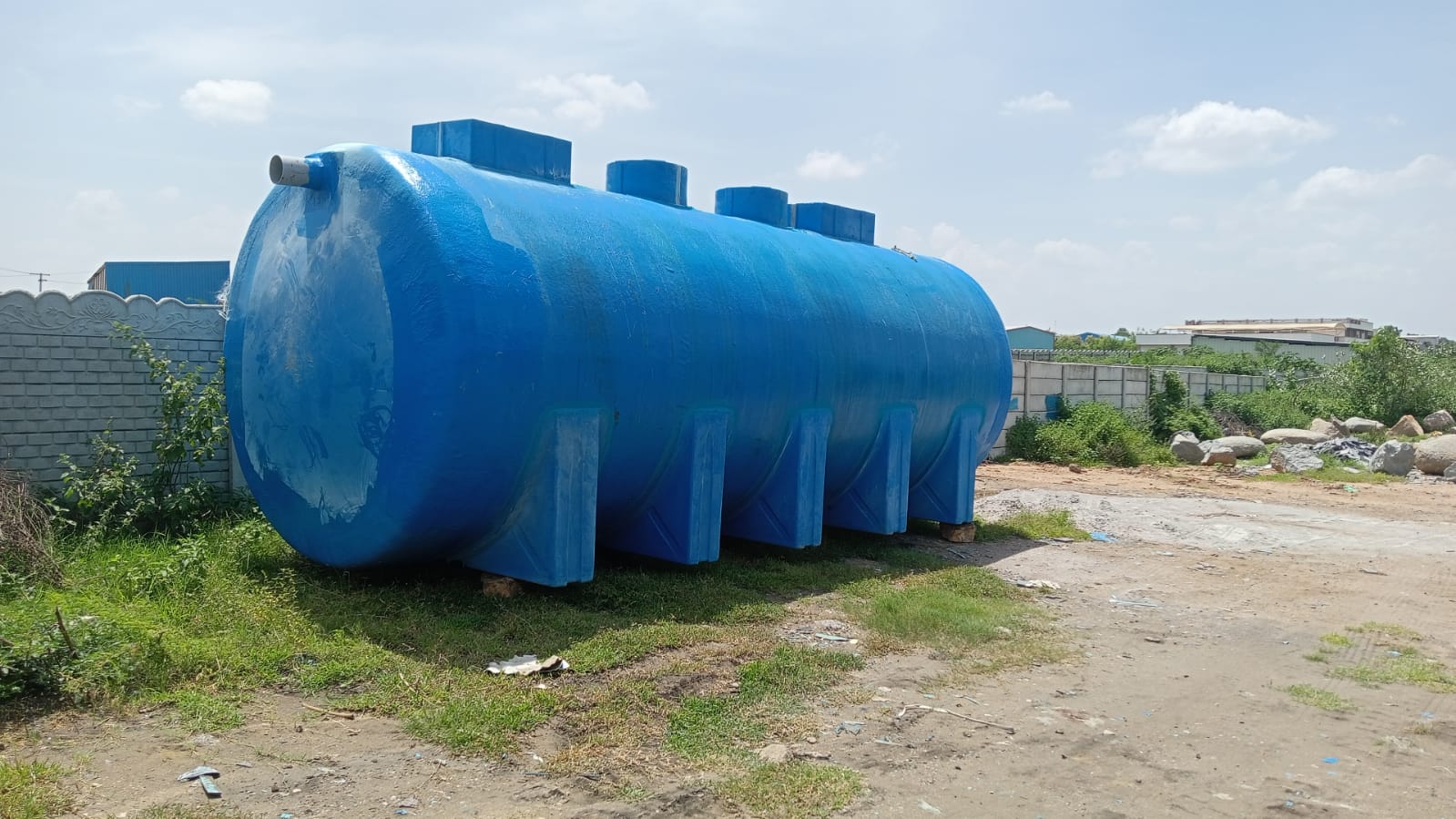
Manufacturing method (FRP tank) | Chop-spray / contact molding (also called spray-up or hand lay-up with chopper gun) for many classic Johkasou tanks — lower fibre continuity, more resin-rich, easier to produce in many factories. (Magnum Venus Products) | Filament-winding for main cylindrical shell (continuous fibre, controlled fibre angles, higher fibre volume fraction → much higher structural strength and predictable properties). User/company claim: easySTP uses filament winding for structural shells; domes/ends may be molded or overlaid. (Filament winding references). (Wikipedia) |
Structural strength & stiffness | Good, but generally lower hoop/axial strength per mm due to chopped fibers and resin-rich matrix — more subject to impact and long-term fatigue under load. (ResearchGate) | Higher strength-to-weight ratio, engineered fibre placement gives better hoop & axial strength; more tolerant of ground loads and handling. Filament wound shells also allow optimized thickness and controlled failure modes. (Wikipedia) |
Durability in Indian climate(heat cycles, UV, variable temps) | Adequate if made well and UV-protected; more vulnerable to resin-rich zones, microcracks, and long term degradation if not properly controlled. | Designed for India’s extremes — filament winding gives consistent laminate with higher glass content and better thermal/mechanical tolerance; combined with appropriate resin selection improves life in high temperature cycles. (company claim / design decision) |
Tolerance to misuse / solids / kitchen waste | Japanese households often have grinders; Johkasou designs historically assume less coarse kitchen solids (less grit) — this influenced internal configuration and smaller external screens. (Kubota Global Site) | Indianized by adding an external Bar-Screen Chamberto intercept kitchen solids, rags, and plastics before entering the primary chamber — reduces clogging, protects pumps and diffusers (practical adaptation to Indian usage patterns). (company claim) |
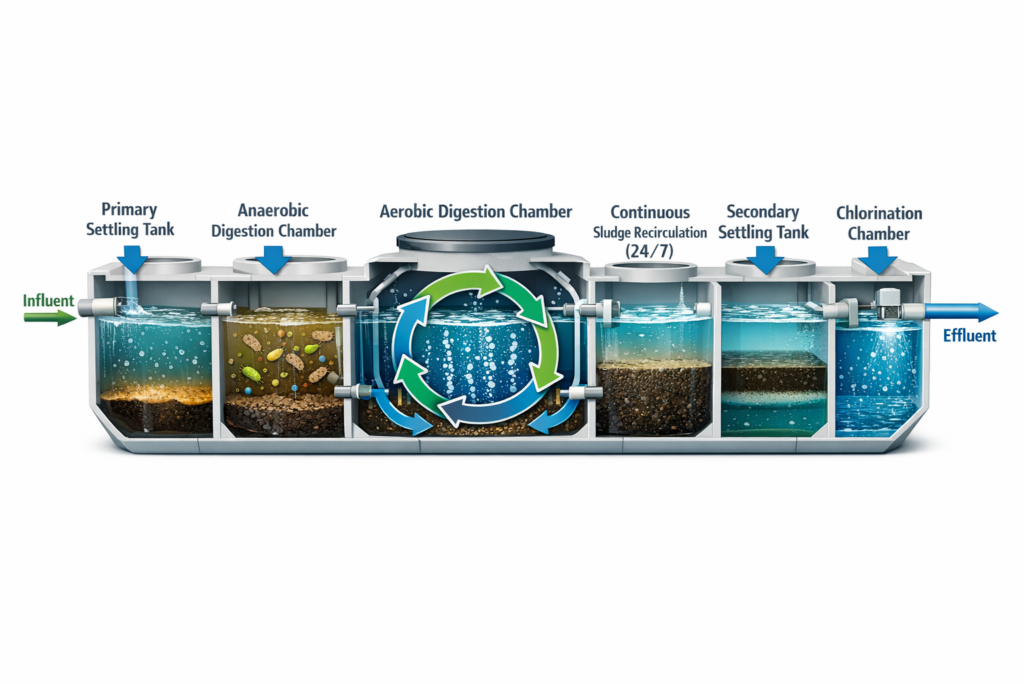
Process & biology(treatment stages) | Full Johkasou process: primary settling, anaerobic digestion, aerobic treatment, secondary settling, chlorination, with continuous recirculation (multi-pass) to improve settling and BNR. This is the classic process topology used in Japanese units. (Kubota Global Site) | same Johkasou-derived process (primary + anaerobic + aerobic + recirculation + secondary settling + chlorination). easySTP follows Johkasou process but tuned for Indian influent (higher solids, grease, seasonal temp swings). (company claim) |
Tertiary requirement | Many Johkasou designs achieve good final clarity and low SS because of excellent sludge settling from recirculation — often minimal tertiary filtration required for non-potable reuse. (Kubota Global Site) | same advantage retained — easySTP encourages good settling; but Indian reuse standards / local norms will dictate tertiary usage (e.g., for horticulture vs cooling towers). (company guidance) |
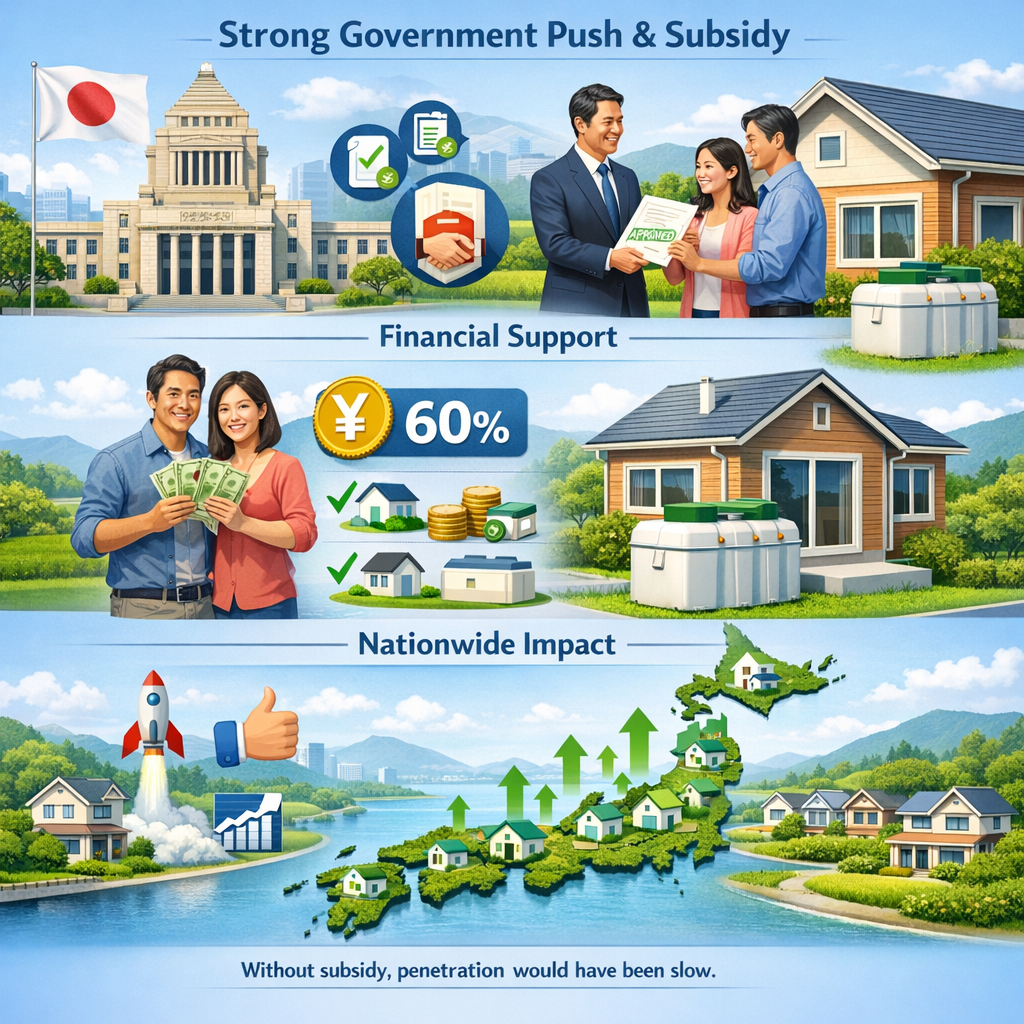
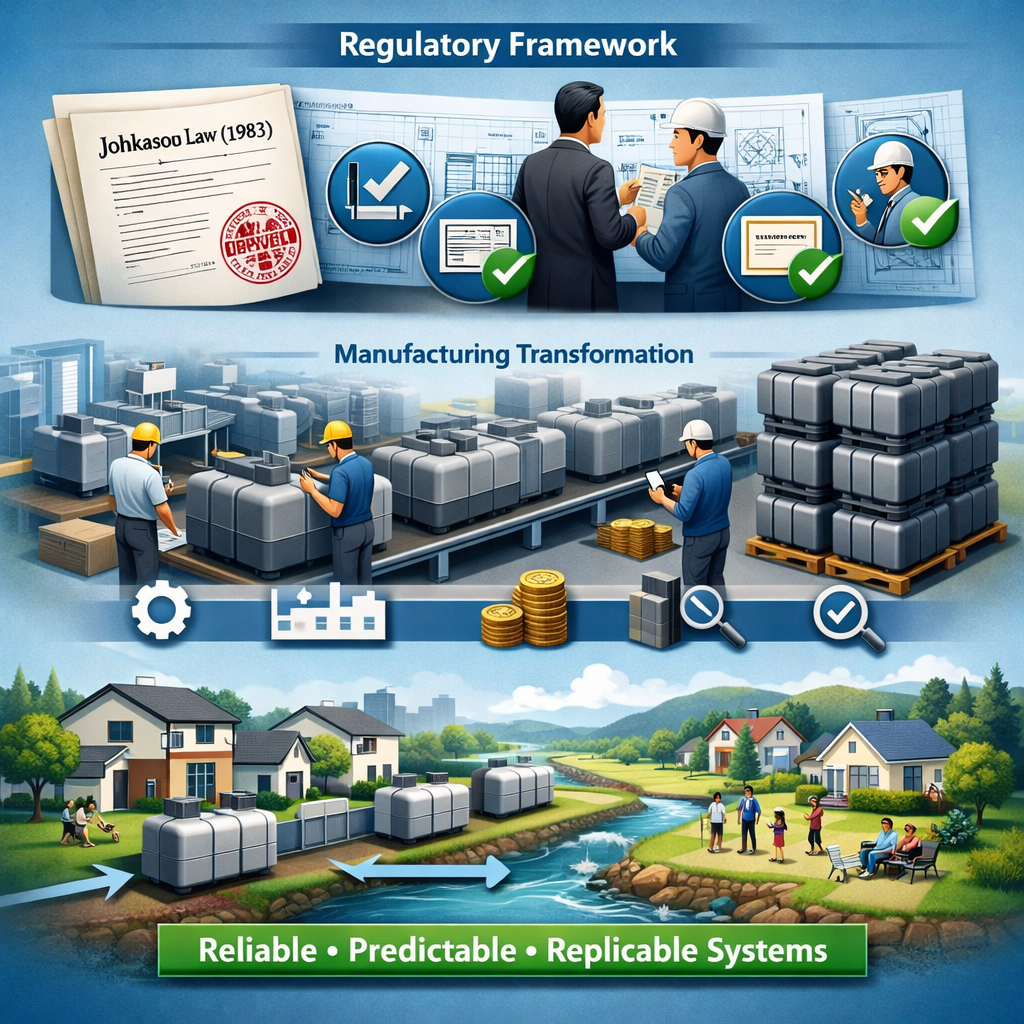
Quality control & standardization | In Japan, Johkasou manufacture and installation is standardized and regulated (Johkasou Law, inspections, certified technicians). Manufacturers like Kubota follow strict QC. (Kubota Global Site) | easySTP follows factory QC, adds stronger manufacturing method (filament winding) and locally tested processes for Indian sewage; supports certified installers & AMC network. (company operations) |
Ease of local servicing / spare parts | In Japan: strong local ecosystem for spares/inspectors. Outside Japan, spare/support depends on local importer network. (Kubota Global Site) | Designed with local maintainability in India: local spares, trained technicians, and bar-screen makes routine servicing simpler. (company operations) |
Typical capacity & scaling | Johkasou units commonly for household to small multi-household (1–50 KLD module sizes — modular). Manufacturers combine modules for larger capacities. (Daiki Axis India) | easySTP available in modular sizes; for larger campus/municipal >200 KLD, RCC tanks with Johkasou process are recommended (see RCC note below). (company product strategy) |
Lifespan (shell & structure) | Variable — depends on resin system, laminate quality, UV protection; chop-spray tanks have shorter predictable strength life than filament wound shells if both are properly made. (Magnum Venus Products) | Longer predicted life for filament wound shell; better resistance to mechanical stress and fatigue; lower likelihood of cracking under transport/installation stress. (company claim + manufacturing evidence) |
Cost | Chop-spray / spray-up is cheaper per unit in low-volume or low-tech factories; mass production & standardization in Japan brought costs down with economies of scale. (Magnum Venus Products) | Filament winding requires dedicated machinery and mandrels — higher CAPEX for factory but better repeatability and long-term value. With scale, per-unit cost becomes competitive and justifiable for higher durability in Indian conditions. (Wikipedia) |
Patent & IP | Johkasou is a standardized national model — NOT a single-company patent. (Kubota Global Site) | easySTP is an implementation / adaptation — manufacturing method (filament winding) and process are standard composites practice and the Johkasou process is public domain; you can brand it as easySTP (as you intend). (company positioning) |