
SUBSCRIBE to our monthly NEWSLETTER
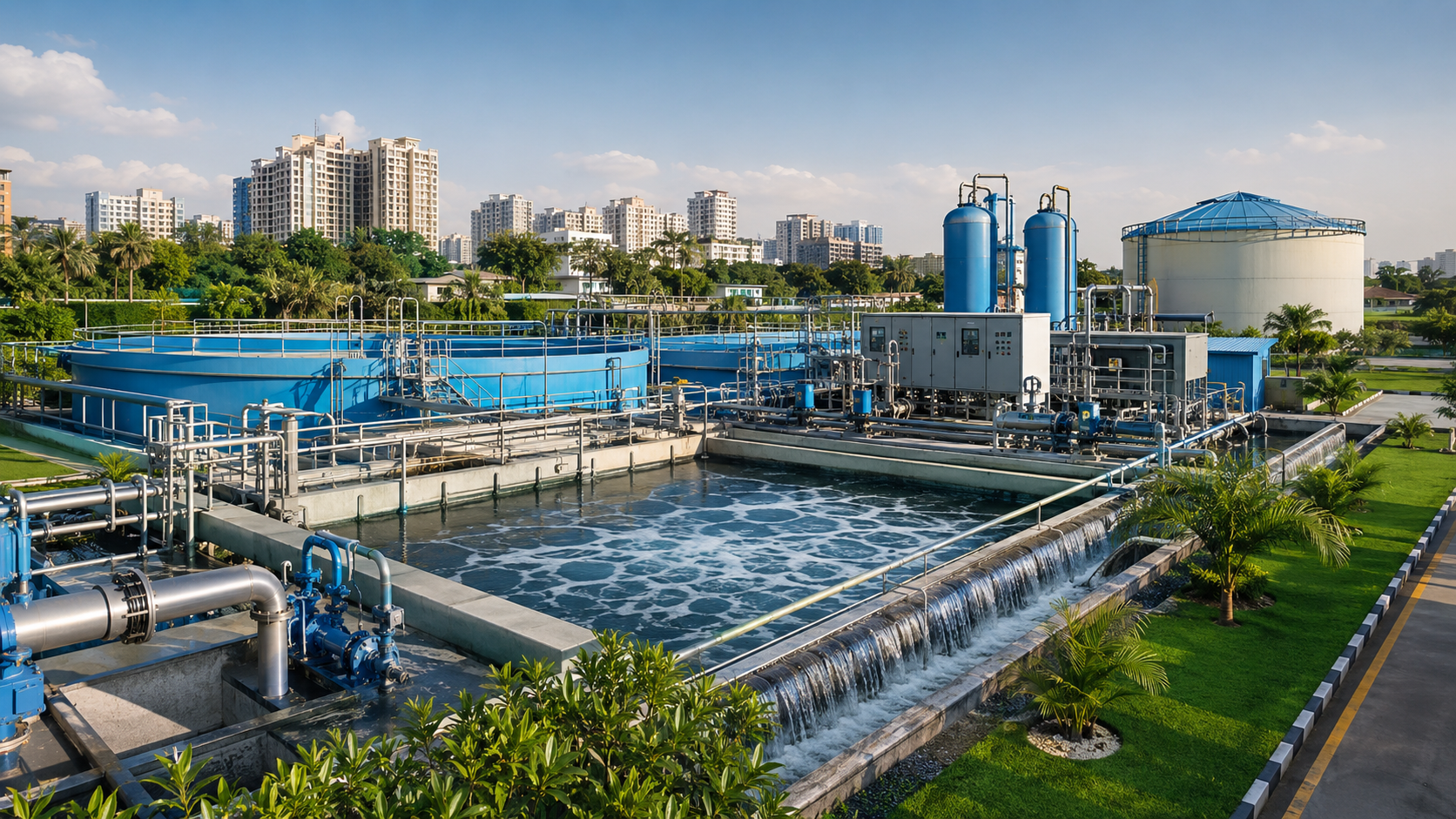
Hyderabad is experiencing significant urban growth, with new residential apartments, gated communities, IT parks, commercial buildings, hospitals, hotels, and industrial developments emerging across the city. As these developments expand, the need for effective wastewater management is becoming increasingly important.
Every residential and commercial facility generates sewage that must be treated appropriately before disposal or reuse. Without an effective sewage treatment system, untreated wastewater can contaminate water bodies, damage ecosystems, and create public health concerns.
This is why property developers, builders, architects, contractors, facility managers, and industries are increasingly searching for sewage treatment plant manufacturers in Hyderabad that can provide reliable, energy-efficient, and easy-to-maintain solutions.
A well-designed sewage treatment plant (STP) helps remove contaminants from wastewater, supports environmental protection, and enables treated water to be reused for suitable non-potable applications such as gardening, toilet flushing, and landscaping, subject to the required water quality standards.
However, selecting the right STP manufacturer involves more than comparing equipment prices. Buyers should consider engineering expertise, treatment technology, installation requirements, operating costs, maintenance support, and long-term plant performance.
Indus Ecowater Infratech Pvt. Ltd. provides engineering-focused sewage treatment and wastewater management solutions designed for real-world Indian operating conditions. With technologies such as easySTP Municipal, easySBR, MBBR, MBR, and sewage recycling systems, Indus Ecowater supports residential, commercial, industrial, and municipal wastewater projects.
In this guide, we explore the different STP technologies available, the factors to consider when selecting a manufacturer, and why Indus Ecowater can be considered for sewage treatment projects in Hyderabad.
A sewage treatment plant is a system designed to remove physical, biological, and other contaminants from domestic or compatible wastewater. The objective is to produce treated water that meets the applicable quality requirements for its intended discharge or reuse application.
Sewage typically contains organic matter, suspended solids, microorganisms, and other pollutants. Releasing untreated sewage into the environment can adversely affect water quality and surrounding ecosystems.
A properly designed sewage treatment plant uses a combination of physical, biological, and sometimes advanced treatment processes to manage these contaminants.
Although the process varies depending on the selected technology, a typical STP may include the following stages:
The treatment stages depend on the incoming sewage characteristics, plant capacity, selected technology, and required treated-water quality.
For apartments, commercial buildings, and industrial facilities in Hyderabad, choosing the appropriate treatment process is essential for achieving reliable performance and managing long-term operating expenses.
Hyderabad’s expanding urban infrastructure makes wastewater treatment an important consideration for sustainable development.
Apartments, gated communities, shopping complexes, offices, hotels, and educational institutions generate wastewater every day. An appropriately designed STP helps these facilities manage their sewage responsibly.
Freshwater availability and supply costs are important considerations for many property owners and facility managers. Treated wastewater can help reduce freshwater demand when reused for suitable non-potable applications.
For example, treated water may be used for landscape irrigation, toilet flushing, and other approved applications when it meets the relevant quality requirements.
Effective sewage treatment reduces the pollution load entering lakes, rivers, drains, and other receiving environments. Proper sludge handling and operation are also necessary to prevent secondary environmental problems.
Depending on the type, size, location, and approval conditions of a development, sewage treatment and monitoring requirements may apply under the relevant environmental and local building regulations.
Project owners should confirm their obligations with the Telangana Pollution Control Board and the relevant local authority before finalising the system design.
Choosing an experienced sewage treatment plant supplier in Hyderabad can help project teams identify the technical requirements early and plan for appropriate treatment, monitoring, and maintenance.
Different projects require different treatment technologies. The best option depends on wastewater characteristics, daily flow, peak loading, available land, treated-water reuse requirements, capital budget, and operating capabilities.
Sequencing Batch Reactor (SBR) technology treats wastewater in timed stages, generally including filling, biological reaction, settling, decanting, and idle periods as required by the process design.
Because several treatment stages can occur in the same reactor, SBR systems can offer a compact layout and flexible process control.
Key advantages include:
SBR technology can be suitable for apartment complexes, hotels, educational institutions, hospitals, and larger infrastructure projects.
Indus Ecowater offers easySBR, a simplified SBR solution designed to reduce operational complexity through streamlined engineering and automation options.
Learn more: Indus Ecowater easySBR Technology.
Moving Bed Biofilm Reactor (MBBR) technology uses specialised media that provide surfaces for microorganisms to grow. These microorganisms help break down biodegradable pollutants as wastewater passes through the treatment system.
MBBR systems are used in different wastewater applications, depending on their design and configuration.
Key advantages include:
MBBR can be considered for residential communities, commercial facilities, and other projects where its process characteristics match the required treatment objectives.
Membrane Bioreactor (MBR) technology combines biological wastewater treatment with membrane filtration. The membranes provide a physical barrier for separating suspended solids from treated water.
MBR systems can be useful where space is limited or where higher-quality treated water is required for a planned reuse application.
Key considerations include:
The suitability of an MBR system should be assessed against the required treated-water quality, operating budget, and maintenance capabilities.
Compact and prefabricated STPs are designed to simplify installation and reduce the need for extensive on-site construction in suitable applications.
Depending on the design, these systems may use factory-fabricated tanks, modular equipment, or integrated treatment components.
They can be considered for smaller developments, commercial facilities, institutions, and projects with limited installation space.
Before selecting a compact STP, buyers should verify its rated capacity, treatment process, structural requirements, access for maintenance, and suitability for the expected sewage load.
Municipal STPs are designed to treat larger volumes of sewage collected from towns, cities, and urban developments.
These projects require careful planning around flow variation, land availability, hydraulic conditions, process reliability, automation, sludge management, and monitoring requirements.
Indus Ecowater offers easySTP Municipal and municipal SBR solutions for public infrastructure and decentralised wastewater treatment applications.
Explore: Indus Ecowater Municipal Sewage Treatment Plants.
Searching for the best sewage treatment plant manufacturer in Hyderabad can produce many options. To make an informed decision, compare suppliers based on their engineering capabilities and the long-term performance of their proposed systems.
Look for a supplier that understands wastewater characteristics, treatment processes, equipment selection, and site-specific engineering requirements.
A manufacturer or technology provider should be able to explain why a particular treatment technology is suitable for your project rather than recommending the same system for every application.
Ask about relevant project experience, technical documentation, and references from installations with similar requirements.
A reliable STP supplier should be able to evaluate different technologies according to project needs.
For example, an apartment complex may prioritise ease of operation, compact design, and water reuse. A hospital may require a more detailed wastewater assessment, while a municipal project may need a system capable of handling substantial variations in flow.
Compare the proposed technology, treatment stages, equipment requirements, and expected treated-water quality before making a decision.
The initial purchase price is only one part of the total cost of owning an STP.
Electricity, operator requirements, consumables, maintenance, sludge handling, and equipment replacement can contribute significantly to long-term expenses.
Ask suppliers to provide an estimated operating-cost breakdown based on the proposed plant capacity, expected loading, and operating schedule.
Correct installation and commissioning are essential for reliable plant performance.
Before signing a contract, clarify who will handle site assessment, equipment installation, electrical connections, testing, commissioning, and operator training.
Also confirm the scope of work, delivery schedule, warranty conditions, and responsibilities of the supplier and project owner.
A sewage treatment plant needs appropriate operation and maintenance to maintain treatment performance.
Check the availability of spare parts, maintenance schedules, technical support, monitoring systems, and operator instructions.
A system that is straightforward to operate and maintain may be a better long-term choice than a more complicated system that requires specialised intervention for routine tasks.
Ask for the design basis, equipment specifications, process flow diagram, expected treated-water quality, and relevant technical documentation.
The selected system must be designed around the requirements applicable to the specific project. No manufacturer can guarantee compliance simply by supplying equipment; actual performance depends on appropriate design, installation, loading, operation, and maintenance.
Indus Ecowater Infratech Pvt. Ltd. focuses on engineering and wastewater treatment solutions that are designed to be practical, reliable, and suitable for real-world operating conditions.
Rather than considering sewage treatment only as an equipment supply requirement, Indus Ecowater emphasises treatment technology, operational simplicity, energy efficiency, and long-term plant functionality.
Every sewage treatment project has different requirements. Capacity, sewage characteristics, site conditions, available space, reuse objectives, and maintenance capabilities all influence the final system design.
Indus Ecowater offers wastewater treatment technologies for a range of applications, helping project teams evaluate suitable solutions according to their specific needs.
For developers, consultants, contractors, and facility managers, this engineering-focused approach provides a starting point for selecting an appropriate treatment system.
Indus Ecowater’s technology portfolio includes easySBR, easySTP Municipal, MBBR, MBR, and sewage recycling solutions.
Having access to different technologies allows the project requirements to be evaluated before selecting the most appropriate treatment configuration.
The final recommendation should always be based on the actual sewage load, treatment objectives, operating conditions, and project budget.
Operational complexity is an important concern for many sewage treatment plant owners.
Plants that depend on complicated procedures or inadequately trained operators may experience inconsistent performance and avoidable maintenance problems.
Indus Ecowater’s technology approach emphasises simplified operation, streamlined equipment arrangements, and practical engineering.
Its easySBR system uses SBR treatment principles with an emphasis on simpler operation and remote monitoring options. Indus Ecowater’s municipal solutions are designed to address the operational needs of decentralised and larger-scale sewage treatment applications.
These features should be evaluated against the specific capacity, automation package, and operating requirements proposed for each project.
Indus Ecowater’s wastewater treatment solutions can be considered for a variety of project types, including:
Industrial wastewater requires particular attention because its characteristics may differ significantly from domestic sewage. A detailed wastewater assessment is necessary before selecting an appropriate process.
Treating wastewater can create opportunities to reduce freshwater consumption.
Where the treated water meets the required quality standards, suitable reuse applications may include toilet flushing, landscaping, gardening, and other non-potable uses.
Indus Ecowater also provides sewage recycling solutions for projects seeking to integrate wastewater treatment with water reuse.
Explore: Indus Ecowater Sewage Treatment Technologies.
The effectiveness of an STP should be judged by more than its installation date or rated capacity.
Consistent operation, appropriate maintenance, stable treatment performance, and manageable operating expenses are important measures of long-term value.
Indus Ecowater’s emphasis on simplified engineering aims to make sewage treatment more practical for the contractors, developers, municipalities, and communities responsible for operating these systems.
For any proposed installation, buyers should review the technical specifications, performance commitments, warranty terms, and support arrangements before finalising their selection.
Residential developments generate sewage from bathrooms, kitchens, laundry facilities, and other domestic activities.
A suitably designed residential sewage treatment plant can help manage this wastewater and provide treated water for approved non-potable applications.
Important selection factors include the number of residents, expected daily sewage generation, peak flow, available space, and the intended reuse of treated water.
Hotels and restaurants may experience changing wastewater flows depending on occupancy, operating hours, kitchen activities, and seasonal demand.
The STP design should account for these variations and any additional wastewater characteristics that may require pretreatment.
Hospitals require careful assessment of wastewater sources, hygiene considerations, and applicable regulatory requirements.
The treatment system must be selected according to the actual wastewater characteristics and the relevant standards for discharge or reuse.
Commercial facilities can benefit from wastewater treatment systems that support planned reuse and help reduce dependence on freshwater supplies.
Automation and monitoring may also assist facility management teams in tracking system operation and identifying potential problems.
Industrial and municipal projects can involve larger wastewater volumes and more complex operating conditions.
These applications may require detailed engineering studies, specialised treatment stages, process automation, and a structured operation and maintenance plan.
One of the most common questions buyers ask is: What is the cost of a sewage treatment plant in Hyderabad?
There is no single price that applies to every project. The cost depends on the required capacity, treatment technology, construction method, site conditions, equipment selection, and scope of supply.
STP capacity is commonly expressed in KLD (kilolitres per day) or MLD (million litres per day).
A small residential project may need a different system from a large apartment complex, hotel, industrial facility, or municipal development.
The design capacity should be determined from actual sewage generation estimates and appropriate engineering calculations.
SBR, MBBR, MBR, and compact treatment systems have different process requirements, equipment arrangements, and maintenance needs.
The most economical option is the one that meets the project’s treatment requirements while offering an acceptable whole-life cost.
The use of RCC tanks, prefabricated tanks, or other suitable construction arrangements can affect the overall project cost.
Site preparation, foundations, underground utilities, access requirements, and installation conditions may also influence the budget.
Control panels, sensors, instrumentation, PLC-based controls, and remote monitoring features may affect the initial investment.
The appropriate level of automation depends on the project scale, operational requirements, monitoring obligations, and available staff.
Transport, installation, commissioning, operator training, consumables, spare parts, electricity, and sludge management should all be considered when comparing proposals.
Practical tip: Request an itemised quotation that clearly separates equipment supply, civil works, installation, commissioning, and ongoing maintenance. This makes it easier to compare proposals from different STP suppliers in Hyderabad.
A properly designed and operated STP can provide several environmental and operational benefits.
Reduced freshwater demand: Treated wastewater can replace freshwater in suitable non-potable applications.
Improved wastewater management: Treatment reduces the pollution load before the water is discharged or reused appropriately.
Potential operating savings: Efficient equipment selection and suitable process control may help manage electricity and maintenance costs.
Better use of available space: Compact treatment configurations can be useful for urban developments with limited land.
Support for environmental compliance: A system designed and operated to meet applicable requirements helps project owners manage their environmental responsibilities.
Improved resource efficiency: Wastewater treatment and reuse can support more responsible water management across residential, commercial, and infrastructure projects.
Actual results depend on the system design, incoming sewage quality, operating conditions, maintenance practices, and reuse requirements.
Selecting the right manufacturer is only the first step. Proper planning, installation, commissioning, and ongoing maintenance are essential for reliable operation.
Assess the proposed installation area, incoming sewage flow, wastewater characteristics, site access, and available utilities.
Determine the required treatment capacity and compare suitable technologies according to the project’s treatment objectives and operating constraints.
Prepare the process design, equipment specifications, layout, electrical requirements, and sludge-management plan.
Install the equipment according to the approved design, complete the necessary checks, and commission the system under appropriate operating conditions.
Ensure that the personnel responsible for daily operation understand the operating procedures, routine checks, safety measures, and response to alarms.
Follow the recommended maintenance schedule for pumps, blowers, diffusers, membranes where applicable, instruments, and other equipment.
Monitor operating parameters and test treated-water quality at appropriate intervals. Corrective action should be taken when performance deviates from the required standards.
Indus Ecowater’s engineering-focused approach can help project teams evaluate these considerations while planning a suitable sewage treatment solution.
The best supplier depends on your project’s capacity, wastewater characteristics, budget, technology requirements, and maintenance expectations.
Compare the supplier’s engineering capabilities, relevant project experience, technical documentation, installation arrangements, and after-sales support before making a decision.
Indus Ecowater is one option to consider for engineering-focused sewage treatment solutions, including easySBR, easySTP Municipal, MBBR, MBR, and sewage recycling systems.
The price depends on plant capacity, selected treatment technology, tank construction, equipment, automation, site conditions, and installation requirements.
Request a project-specific quotation based on your expected sewage generation and intended reuse or discharge requirements.
SBR, MBBR, MBR, and other suitable treatment configurations can be considered for apartment projects.
The right option depends on available space, sewage flow, treated-water quality targets, electricity consumption, operating capabilities, and the total cost of ownership.
KLD stands for kilolitres per day. One kilolitre equals 1,000 litres, so a 100 KLD plant is designed for a nominal treatment capacity of 100,000 litres per day, subject to its specified operating and design conditions.
Yes. Treated wastewater may be reused for applications such as gardening, landscaping, and toilet flushing when it meets the relevant quality standards and the reuse arrangement is appropriate.
The treatment process should be selected according to the intended use of the treated water.
Maintenance frequency depends on the technology, equipment, operating conditions, and manufacturer’s recommendations.
Routine inspections, equipment servicing, sludge management, and treated-water quality monitoring should form part of a documented maintenance programme.
Indus Ecowater offers municipal wastewater treatment technologies, including easySTP Municipal and municipal SBR solutions. Project suitability should be assessed according to the required capacity, site conditions, treatment objectives, and procurement specifications.
Prepare details about your project location, facility type, occupancy or wastewater generation, expected capacity, available space, and intended treated-water reuse.
Contact Indus Ecowater to discuss your requirements and identify a suitable treatment solution.
Choosing the right sewage treatment plant manufacturer is an important decision for residential developments, commercial facilities, industries, and municipal infrastructure projects.
A successful STP project requires suitable technology, accurate capacity planning, efficient equipment selection, proper installation, and consistent maintenance. Buyers should compare suppliers based on these factors rather than choosing exclusively on the basis of initial purchase price.
Indus Ecowater Infratech Pvt. Ltd. provides engineering-focused wastewater treatment solutions designed to make sewage treatment more practical and reliable. Its technology portfolio includes easySBR, easySTP Municipal, MBBR, MBR, and sewage recycling solutions for different project requirements.
Whether you are planning an apartment sewage treatment plant, a commercial wastewater treatment system, or a municipal STP project, the first step is to assess your wastewater generation, site conditions, and treatment objectives.

With over two decades in the water treatment business, I pioneered bulk pure water distribution and now lead the way in sustainable sewage treatment with easySTP, inspired by Japan’s Johkasou technology. My vision includes widespread adoption and expansion through a new factory and sewage academy.
With over two decades in the water treatment business, I pioneered bulk pure water distribution and now lead the way in sustainable sewage treatment with easySTP, inspired by Japan’s Johkasou technology. My vision includes widespread adoption and expansion through a new factory and sewage academy.
SUBSCRIBE to our monthly NEWSLETTER